Roof Truss Deflection: Definition, Types And Design Solutions
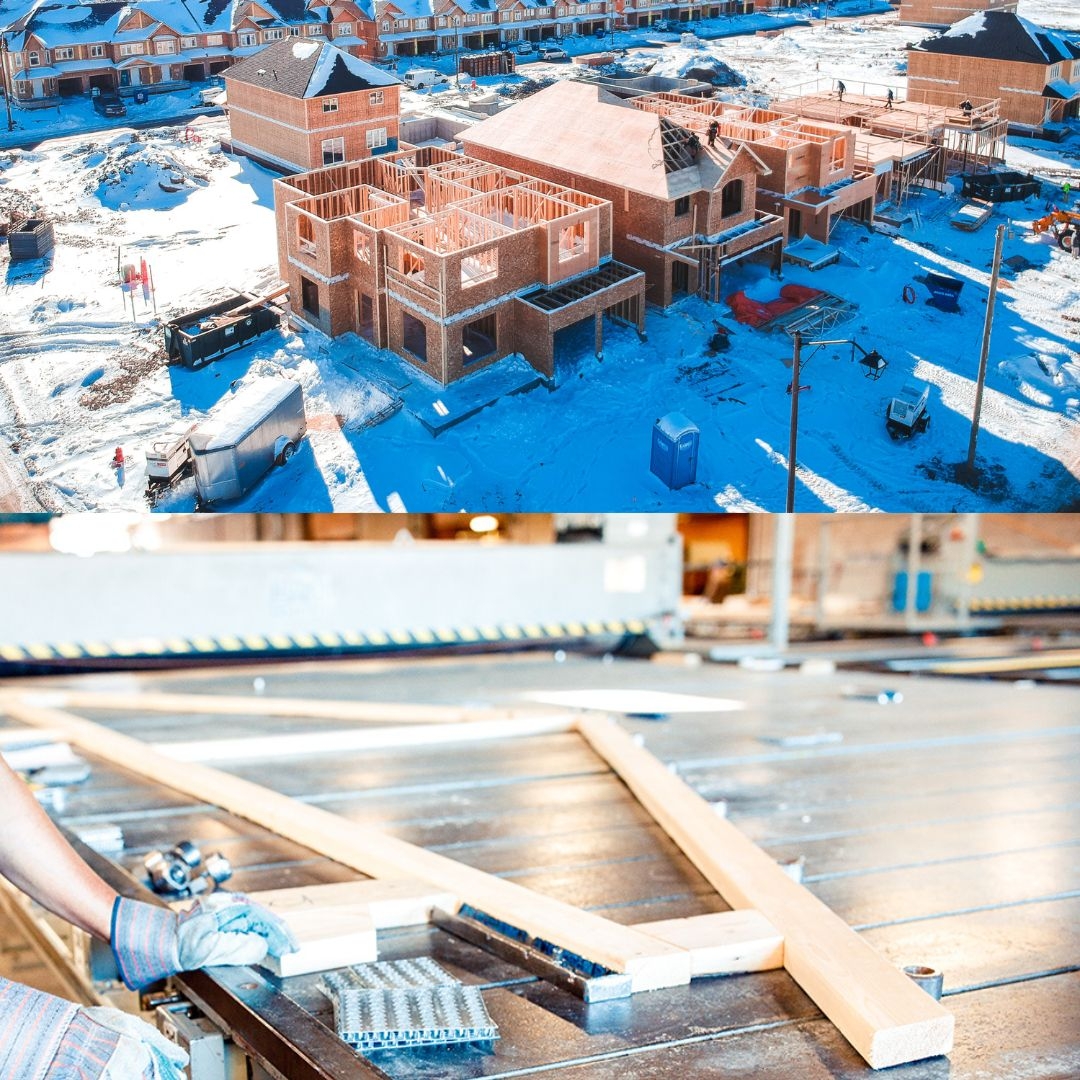
Roof truss deflection, also known as allowable deflection or deflection limit, is the maximum allowable bending or sagging of the bottom member of roof trusses. This is a key consideration for roof truss designs. In this blog, Tamarack Lumber Inc., a leading manufacturer of roof trusses in Burlington, Ontario, explores how this parameter is calculated, its types, and how designers further account for it.
How To Calculate Deflection Limit For Roof Trusses?
The deflection limit of a roof truss is mainly calculated as a fraction of the total span of the truss, the latter being denoted as L. The deflection is typically calculated by dividing the span of the roof truss by 180, 240, or 360, depending on the type and deflection restrictions.
For instance, for a roof truss with a span L of 24 feet or 288 inches, the deflection limit is calculated as:
288/240 = 1.2 inches
What Are The Different Types Of Deflection Limits?
There are two main types of deflection limits to consider during roof truss designs, which are:
- Live Load Limit: Live load encompasses the temporary load acting on the truss, and its limit is set to L/240 or even L/360 in some cases.
- Total Load Limit: This considers both dead load and live load acting on the roof truss, and its limit is set to L/180 to L/240 in most cases.
How Is Deflection Offset In Wooden Roof Trusses?
In spite of deflection limits, wooden roof trusses can sag a bit over time. This gradual increase in deflection is known as creep. Roof truss designs also have to consider creep. The creep is offset by adding a camber or a slight upward curve along the span of the roof truss.
This compensates for the creep and ensures a proper deflection limit protects drywall and plaster, ensures proper drainage in the roof and makes sure that the occupants do not perceive sag or movement with increased loads.
Conclusion
To summarize, the deflection limit is an important calculation to consider for roof trusses and is mainly divided into live load and total load limits. Roof truss manufacturers consider this and creep, which is additional sag with prolonged use, and offset it with a camber during initial design.
To learn more about interesting roof truss design considerations, contact us at Tamarack Lumber Inc. today. We are a major manufacturer and distributor of roof trusses in Burlington, Ontario and cater to a wide variety of residential and commercial projects. Give us a call at 905-335-1115 for more details.
FAQs:
What other key configurations are required for roof truss design?
For effective roof truss design, consider span, slope, pitch, panel length, truss type, load conditions, spacing, connections and material properties.
Why are stricter deflection load limits required in some truss designs?
Stricter deflection load limits might be required for certain materials or reduce the perception of excessive movement.