6 Factors That Determine Roof Truss Selection
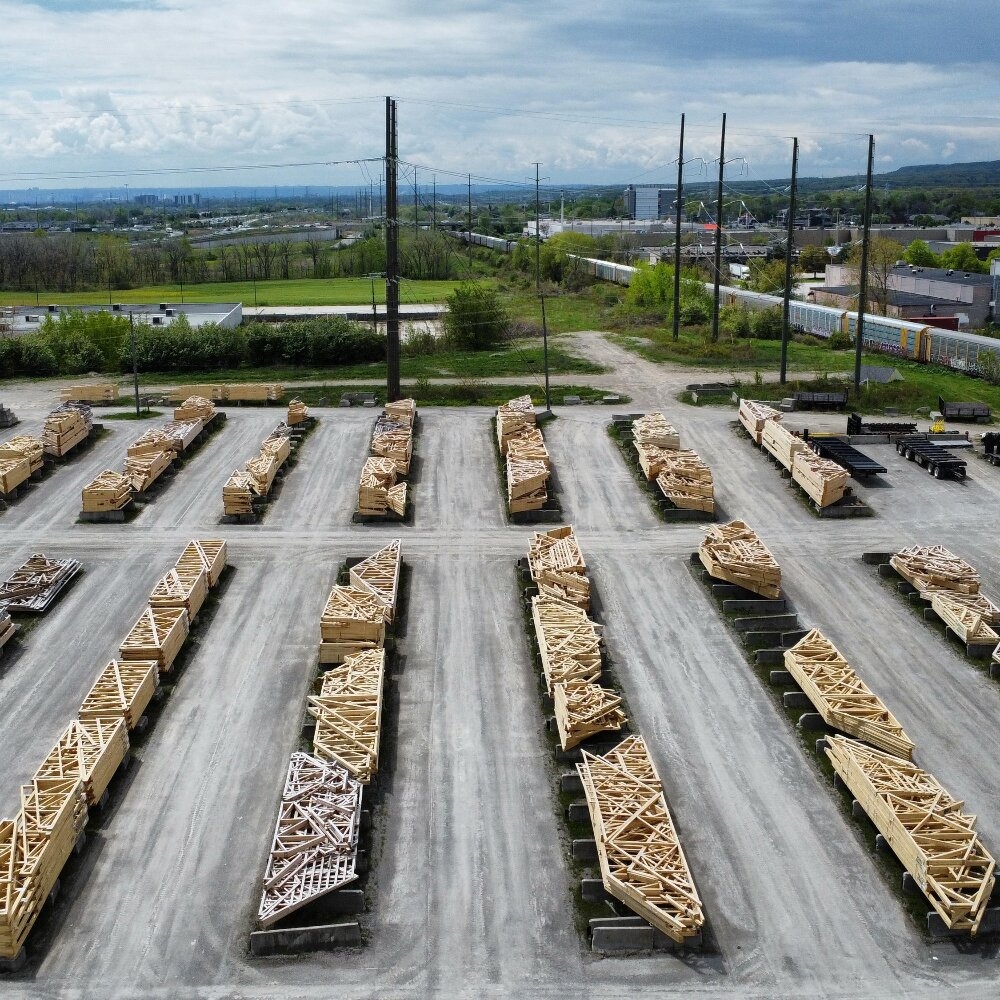
The six main factors to consider when designing a roof truss include building type, roof design, load-bearing capacity, material selection, cost, and timeline. Tamarack Lumber Inc., a major manufacturer of roof trusses in Burlington, Ontario, explores these 6 factors in detail in this blog.
How To Select Roof Trusses Appropriately?
Building Type
The type of building being constructed is a major choice when considering roof trusses. For residential structures, a more simply designed roof truss might be suitable, such as a king post or queen post truss. Conversely, for commercial or institutional buildings, more open spaces might be considered, warranting the use of scissor roof trusses or parallel chord trusses.
Roof Design
Next, the type of roof being considered will also help determine the type of roof truss. For instance, for roofs with a large span, a Howe truss might be a better choice than a queen post truss.
Load-Bearing Capacity
The amount of load that a roof truss is designed to carry is a major consideration, as failing to consider it might lead to premature collapse or failure. The three main types of load to consider are dead loads, live loads and environmental loads.
Material Selection
The type of material also impacts the roof truss design and installation. While wooden roof trusses are a popular choice, there are a variety of woods to choose from. The type of wood and its treatment will be a major deciding factor.
Cost
Apart from quality, cost is a major factor to consider when selecting roof trusses. Pre-fabricated roof trusses might cost less than custom roof trusses in this case, as the former is pre-made and transported to the construction site.
Timeline
Lastly, the timeline of the construction project will also need to be considered. Once again, pre-fabricated roof trusses are better-suited for tight deadlines. Apart from this, site accessibility and installation expertise can also play a role in finishing the truss installation on time.
Conclusion
To conclude, roof trusses should be selected after considering building and roof type, cost, project timeline, load considerations and material selection.
Reach out to us at Tamarack Lumber Inc. to learn more about design considerations. As one of the leading roof truss manufacturers and distributors in Burlington, Ontario, our quality products cater to a wide variety of residential and commercial projects. We offer end-to-end services in the form of design, manufacturing and delivery. Give us a call at 905-335-1115 for more details.
FAQs:
What type of trusses are suited for industrial warehouses?
For industrial warehouses, mono trusses, fan trusses, or Howe trusses can be selected due to their large spans and the ability to support heavy loads.
What is the difference between dead load and live load?
Dead load calculates the weight of unmoving materials such as shingles, roofing and tiles. Live loads calculate the weight of temporary loads, such as furniture or workers moving on it during installation.